Artificial intelligence (AI) is revolutionizing the mobile app landscape, significantly enhancing user experience by making apps smarter, more intuitive, and highly personalized. The integration of AI in mobile apps is transforming how users interact with technology, leading to more engaging and efficient experiences.
One of the most notable impacts of AI on mobile app user experience is through personalized recommendations. By analyzing user behavior and preferences, AI algorithms can suggest content, products, or services that are tailored to individual users. This level of personalization not only enhances user satisfaction but also increases engagement and retention rates. For example, streaming services like Netflix and music apps like Spotify leverage AI to offer customized recommendations, keeping users hooked.
Voice recognition is another AI-driven feature that is reshaping mobile app functionality. With the advent of virtual assistants like Siri, Google Assistant, and Alexa, users can interact with their apps through natural language commands. This hands-free, intuitive mode of interaction simplifies tasks, making apps more accessible and user-friendly. Voice recognition technology also allows for seamless multitasking and improved accessibility for users with disabilities.
Predictive analytics, powered by AI, is enabling mobile apps to anticipate user needs and actions. By analyzing historical data and identifying patterns, AI can predict future behavior, offering proactive suggestions and automating routine tasks. This can range from predicting what a user might want to search for next, to automating daily activities like scheduling appointments or sending reminders. Such predictive capabilities enhance convenience and streamline user interactions, making apps more efficient and user-centric.
Integrating AI into mobile apps offers numerous benefits. It leads to enhanced user engagement through personalized experiences, increased efficiency with automated and predictive functionalities, and improved accessibility with voice recognition features. AI-driven apps are not only more responsive to user needs but also more capable of evolving based on user interactions, ensuring a continually optimized user experience.
In conclusion, the impact of AI on mobile app user experience is profound, driving significant improvements in personalization, accessibility, and efficiency. As AI technology continues to advance, its integration into mobile apps will undoubtedly lead to even more innovative and user-friendly experiences, setting new standards for the digital age.
As the digital landscape evolves, mobile app development continues to be at the forefront of technological innovation. The future of mobile app development is being shaped by several emerging trends, including the rise of 5G technology, the increasing use of artificial intelligence (AI), and the growing demand for cross-platform development. These advancements are not only transforming how apps are built but also how they perform and engage users. In this blog, we will explore these trends and discuss how businesses can leverage them to stay ahead of the curve.
The Rise of 5G Technology
5G technology is set to revolutionize mobile app development by providing significantly faster data speeds, lower latency, and improved connectivity. With 5G, mobile apps can offer more immersive and real-time experiences, enabling features such as high-definition video streaming, augmented reality (AR), and virtual reality (VR). For developers, this means the ability to create more sophisticated and resource-intensive applications without compromising performance.
For businesses, adopting 5G-enabled mobile apps can enhance customer engagement and provide a competitive edge. Industries such as healthcare, gaming, and retail can particularly benefit from the capabilities of 5G. For instance, telemedicine apps can offer real-time remote consultations with minimal lag, while AR shopping apps can provide interactive and personalized experiences for users.
The Increasing Use of Artificial Intelligence
Artificial intelligence is becoming a cornerstone of mobile app development, offering capabilities that range from personalized user experiences to advanced analytics. AI-powered features such as chatbots, recommendation engines, and voice assistants are becoming standard in many mobile apps, improving user interaction and satisfaction.
AI can also optimize app performance by analyzing user behavior and predicting future trends. This allows businesses to make data-driven decisions and tailor their offerings to meet the evolving needs of their users. For example, e-commerce apps can use AI to provide personalized product recommendations based on a user’s browsing and purchase history, increasing the likelihood of conversions.
The Growing Demand for Cross-Platform Development
With the increasing variety of devices and operating systems, cross-platform development has become essential for reaching a broader audience. Tools and frameworks like React Native, Flutter, and Xamarin enable developers to write code once and deploy it across multiple platforms, including iOS and Android. This approach not only reduces development time and costs but also ensures a consistent user experience across different devices.
For businesses, adopting cross-platform development can accelerate time-to-market and maximize reach. It allows for more efficient use of resources and simplifies maintenance and updates. By ensuring that their apps are accessible to users regardless of their device preferences, businesses can enhance customer satisfaction and loyalty.
Staying Ahead of the Curve
To stay ahead in the rapidly evolving mobile app landscape, businesses need to embrace these trends and invest in cutting-edge technologies. Here are a few strategies to consider:
Invest in 5G-Ready Solutions: Prepare for the widespread adoption of 5G by developing apps that can leverage its capabilities. Focus on features that require high-speed connectivity and low latency to deliver superior user experiences.
Incorporate AI and Machine Learning: Integrate AI-driven features to enhance user engagement and provide personalized experiences. Use machine learning algorithms to analyze user data and optimize app performance.
Adopt Cross-Platform Development Tools: Utilize cross-platform frameworks to ensure your app reaches the maximum number of users. This approach can help reduce development time and costs while maintaining a high-quality user experience.
Stay Updated with Industry Trends: Keep an eye on emerging technologies and industry trends. Regularly update your app to incorporate new features and improvements that meet the changing expectations of users.
In conclusion, the future of mobile app development is bright and full of opportunities. By embracing the rise of 5G, harnessing the power of AI, and adopting cross-platform development, businesses can create innovative and engaging mobile apps that cater to the needs of today’s tech-savvy users. Staying ahead of these trends will not only enhance user satisfaction but also provide a competitive advantage in the ever-evolving digital landscape.
As web development continues to evolve, choosing the right framework can significantly impact the success of a project. In 2024, several frameworks stand out for their robustness, versatility, and community support. Among the most prominent are React.js, Angular, Vue.js, and Node.js. Each of these frameworks offers unique features and benefits that cater to different web development needs.
React.js
React.js, developed by Facebook, remains a favorite among developers due to its component-based architecture and virtual DOM. It excels in building dynamic and high-performance user interfaces, making it ideal for single-page applications (SPAs) and complex front-end development projects. React’s extensive ecosystem, including libraries like Redux for state management, further enhances its flexibility and power. Its declarative nature simplifies debugging and makes code more predictable, providing a seamless development experience.
Angular
Angular, maintained by Google, is a comprehensive framework that offers a complete solution for front-end development. With its two-way data binding, dependency injection, and TypeScript support, Angular is well-suited for building large-scale, enterprise-level applications. It provides a rich set of tools and features out of the box, including a powerful CLI, form validation, and HTTP client. Angular’s opinionated structure and extensive documentation make it a solid choice for teams seeking consistency and productivity in their development process.
Vue.js
Vue.js, known for its gentle learning curve and flexibility, has gained popularity for its simplicity and ease of integration. It allows developers to incrementally adopt its features, making it a great option for both small and large projects. Vue’s reactivity system and template syntax are intuitive, enabling developers to build interactive user interfaces with minimal effort. Additionally, Vue’s robust ecosystem, including Vuex for state management and Vue Router for routing, supports scalable application development.
Node.js
Node.js, a server-side runtime environment based on JavaScript, revolutionizes web development by allowing developers to use a single programming language for both client-side and server-side code. Its non-blocking, event-driven architecture ensures high performance and scalability, making it an excellent choice for real-time applications, APIs, and microservices. The vast npm package ecosystem provides access to a wide range of modules and libraries, streamlining the development process and reducing time to market.
Conclusion
When choosing the best framework for a web development project in 2024, businesses should consider factors such as project requirements, team expertise, scalability, and community support. React.js is ideal for highly interactive UIs, Angular for comprehensive enterprise solutions, Vue.js for flexible and approachable development, and Node.js for efficient server-side applications. By understanding the strengths and use cases of each framework, businesses can make informed decisions that align with their goals and drive successful web development outcomes.
Building a Robust E-Commerce Platform from Scratch
Creating a powerful e-commerce platform from scratch is a complex yet rewarding endeavor that requires careful planning and execution. The first step in building a robust platform is selecting the right technology stack. Popular choices include using a combination of HTML, CSS, and JavaScript for the front end, alongside back-end technologies like Node.js, Ruby on Rails, or Django. Pairing these with databases such as MongoDB, MySQL, or PostgreSQL ensures that your platform can handle large volumes of data efficiently. Additionally, incorporating a content management system (CMS) like Magento, Shopify, or WooCommerce can streamline product management and improve scalability.
Designing a user-friendly interface is critical to the success of any e-commerce platform. Focus on creating a clean, intuitive layout that simplifies navigation and enhances the user experience. Prioritize responsive design to ensure that your platform performs well across various devices, from desktops to mobile phones. Employ UX/UI best practices such as clear call-to-action buttons, easy-to-use search functionality, and straightforward checkout processes to reduce friction and increase conversion rates. High-quality product images, detailed descriptions, and customer reviews can further enrich the shopping experience.
Implementing secure payment gateways is essential to protect both your business and your customers. Choose reputable payment processors like PayPal, Stripe, or Square to handle transactions securely. Ensure that your platform complies with the Payment Card Industry Data Security Standard (PCI DSS) to safeguard sensitive payment information. Additionally, incorporating SSL certificates and encryption protocols can further enhance security. It is also advisable to provide multiple payment options, such as credit/debit cards, digital wallets, and bank transfers, to cater to diverse customer preferences.
Optimizing your e-commerce platform for better performance involves several strategies. Implement caching mechanisms to speed up page load times and reduce server load. Utilize content delivery networks (CDNs) to distribute content globally, ensuring fast and reliable access for users regardless of their location. Regularly monitor and analyze website performance using tools like Google Analytics to identify and address potential bottlenecks. Enhancing SEO practices by incorporating relevant keywords, meta tags, and high-quality content can also drive organic traffic and improve visibility.
Building a robust e-commerce platform from scratch requires a combination of the right technology, user-centric design, secure payment processing, and continuous optimization. By carefully considering these elements and following best practices, businesses can create a powerful online store that attracts customers, fosters trust, and drives sales.
India has rapidly emerged as a major global hub for mobile app creation, largely due to its cost-effectiveness and highly skilled workforce. The price of building an app in India is significantly lower when compared to the U.S., UK, or Australia, without compromising on quality. Whether you’re a startup with budget limitations or a large company seeking scalable app solutions, India delivers development services tailored to every budget. But what is the actual cost of creating an app in India in 2025?
Factors that influence app development cost in India
Cost based on App complexity
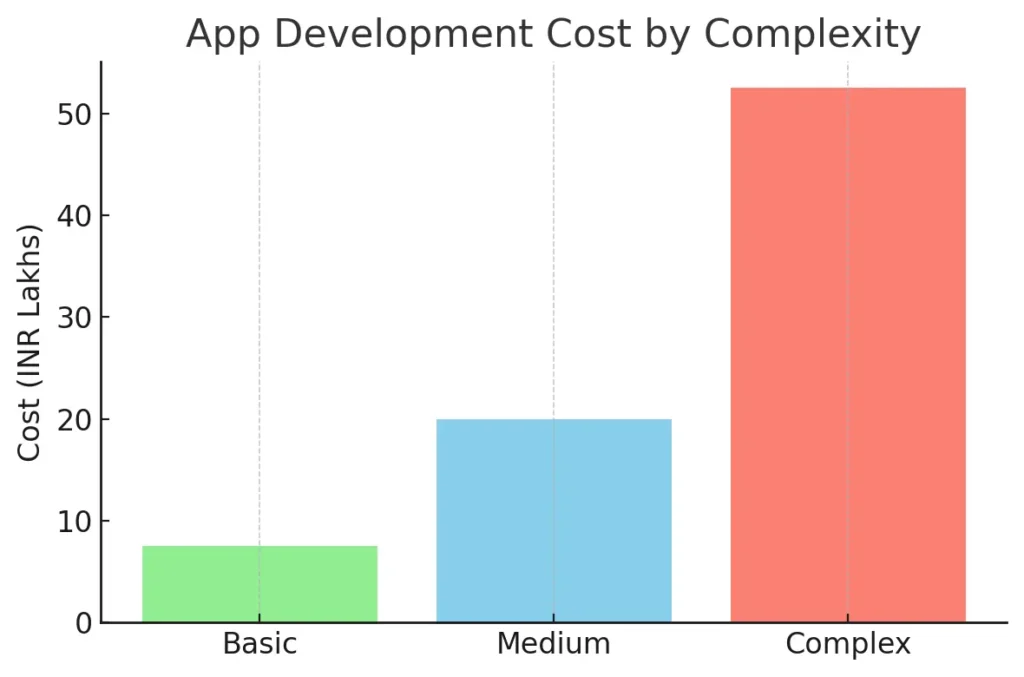
The expense of app development in India is highly dependent on its complexity. For example, basic utility apps like calculators or notepads can cost between INR 3.75 to 11.25 lakhs (approximately $5,000 to $15,000) and generally take 1–3 months to complete. Apps of medium complexity, such as chat applications or e-commerce platforms, range from INR 11.25 to 30 lakhs ($15,000 to $40,000) and need roughly 4–7 months. On the other end, sophisticated apps featuring advanced functions like AI integration, real-time tracking, or high-end graphics can cost from INR 30 lakhs to over 75 lakhs ($40,000 to $100,000+), with timelines extending beyond 8 months.
Cost based on Stages
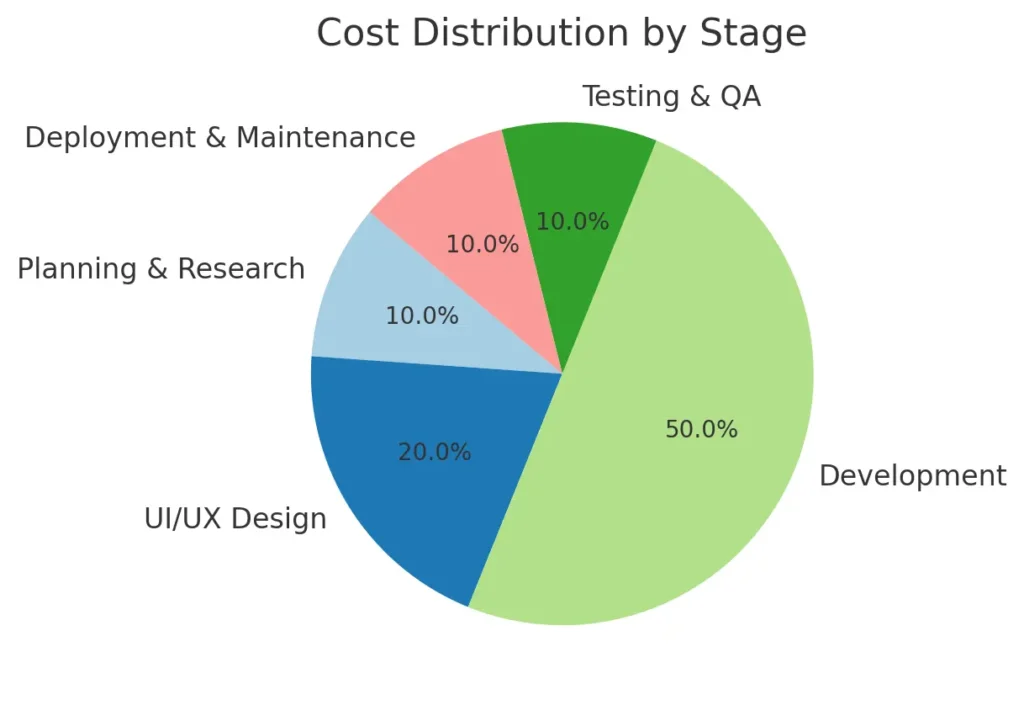
Cost is also split across various stages of app development. Typically, planning and research account for roughly 10% of the total expenditure. UI/UX design can consume another 10–25%, while front-end and back-end development take the largest portion—nearly 50% of the overall budget. Testing and quality assurance account for about 10–15%, and deployment along with ongoing maintenance can add an extra 10–20% annually.
Platform-based pricing
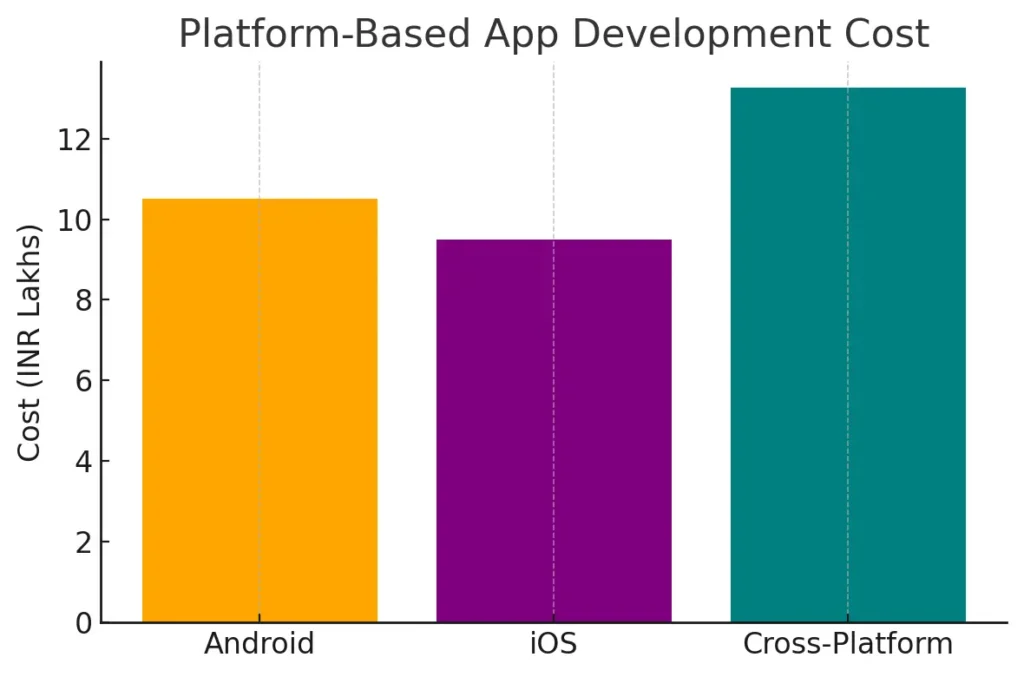
Platform choice also affects pricing. Developing an Android-only app usually costs between INR 6 to 15 lakhs, while iOS-only versions might range from INR 5.5 to 13.5 lakhs. Cross-platform development utilizing tools like Flutter or React Native can cost approximately INR 7.5 to 19 lakhs, providing the benefit of writing code once and deploying it on both platforms.
Hidden and additional costs
Hidden and additional costs are frequently overlooked but are just as crucial. For example, publishing your app on Google Play requires a one-time fee of INR 2,000, whereas Apple charges INR 7,900 annually. Backend services and cloud hosting solutions like AWS or Firebase can range from INR 3,000 to 10,000 monthly. Additional expenses could involve third-party integrations like payment gateways, analytics tools, or mapping services, all of which add to both licensing and development time.
App category and its impact on cost
App category also significantly impacts the cost. E-commerce apps frequently fall in the INR 20–60 lakh range, while social networking apps can go as high as INR 70 lakhs. On-demand service apps like food delivery or ride-hailing typically cost between INR 18 to 90 lakhs. Fintech apps, known for their security needs, typically range from INR 22 to 80 lakhs. Healthcare and fitness apps are between INR 12 to 55 lakhs.
Developers’ hourly rates in India
Hourly rates for developers differ based on experience. A junior developer might charge INR 1,200 to 2,000 per hour, while mid-level and senior developers can command anywhere from INR 2,000 to 6,000 per hour. Beyond developers, your team might include project managers, business analysts, designers, and QA specialists, all of which add to the overall expense.
Budget optimization strategy
There are multiple ways to optimize your development budget. Beginning with a Minimum Viable Product (MVP) lets you concentrate on core features and iterate based on user feedback. Choosing cross-platform tools can reduce development time and cost. Utilizing open-source libraries and APIs can minimize the need for custom development. Outsourcing to tier-2 cities in India can offer quality services at a lower price. Early and continuous testing is key to catching bugs before they become expensive fixes.
Market growth and strategy
The Indian mobile app development market is expanding fast. It’s projected to reach $20.7 billion by 2026, growing at a CAGR of 21.7%. Globally, mobile app revenues are expected to grow from $467 billion in 2023 to $673 billion by 2027. This growth provides a strong opportunity for businesses to embrace mobile-first strategies.
Choosing the right payment model
When selecting a payment model, assess the scope of your project. Fixed-price models are ideal for clearly defined projects with predictable costs. Hourly models offer flexibility for projects that are still evolving. For long-term engagements or large-scale projects, hiring a dedicated team may be the most effective approach.
Sample budget breakdown of a medium complexity App
For a medium-complexity app, a sample budget breakdown might look like this: INR 2 lakhs for requirement gathering and planning, INR 4 lakhs for UI/UX design, INR 20 lakhs for development, INR 2 lakhs for testing, and approximately INR 3 lakhs for deployment and initial marketing. This results in a total cost of approximately INR 31 lakhs (~$38,000).
Conclusion
In summary, app development in India presents a mix of quality and affordability. With thorough planning, effective tools, and the right team, businesses can launch top-tier apps within their budget. Whether you’re building a basic app or a complex platform, understanding the cost breakdown aids in making informed decisions and ensures a successful launch.